Verbos
hojas de conjugaciónOr start from the pattern itself, with no verb in the way: -ar -er -ir endings.
| bailar | to dance | -ar regular |
| comer | to eat | -er regular |
| vivir | to live | -ir regular |
| ser | to be (essence) | -er irregular |
| estar | to be (state, place) | -ar irregular |
| ir | to go | -ir irregular |
| poder | can, to be able to | -er irregular |
| hacer | to do, to make | -er irregular |
| tener | to have | -er irregular |
| gustar | to be pleasing to (→ to like) | -ar regular |
These ten are the worked examples: three regular models and the irregulars you cannot get through a day without. They carry notes and example sentences on top of the paradigm. Each sheet carries both arrangements, and a control at the top of the page switches between them. Forms printed in red are the ones that break the regular pattern — those are what you actually have to memorise.
Todos los verbos →all 291, searchable, grouped by how common they are
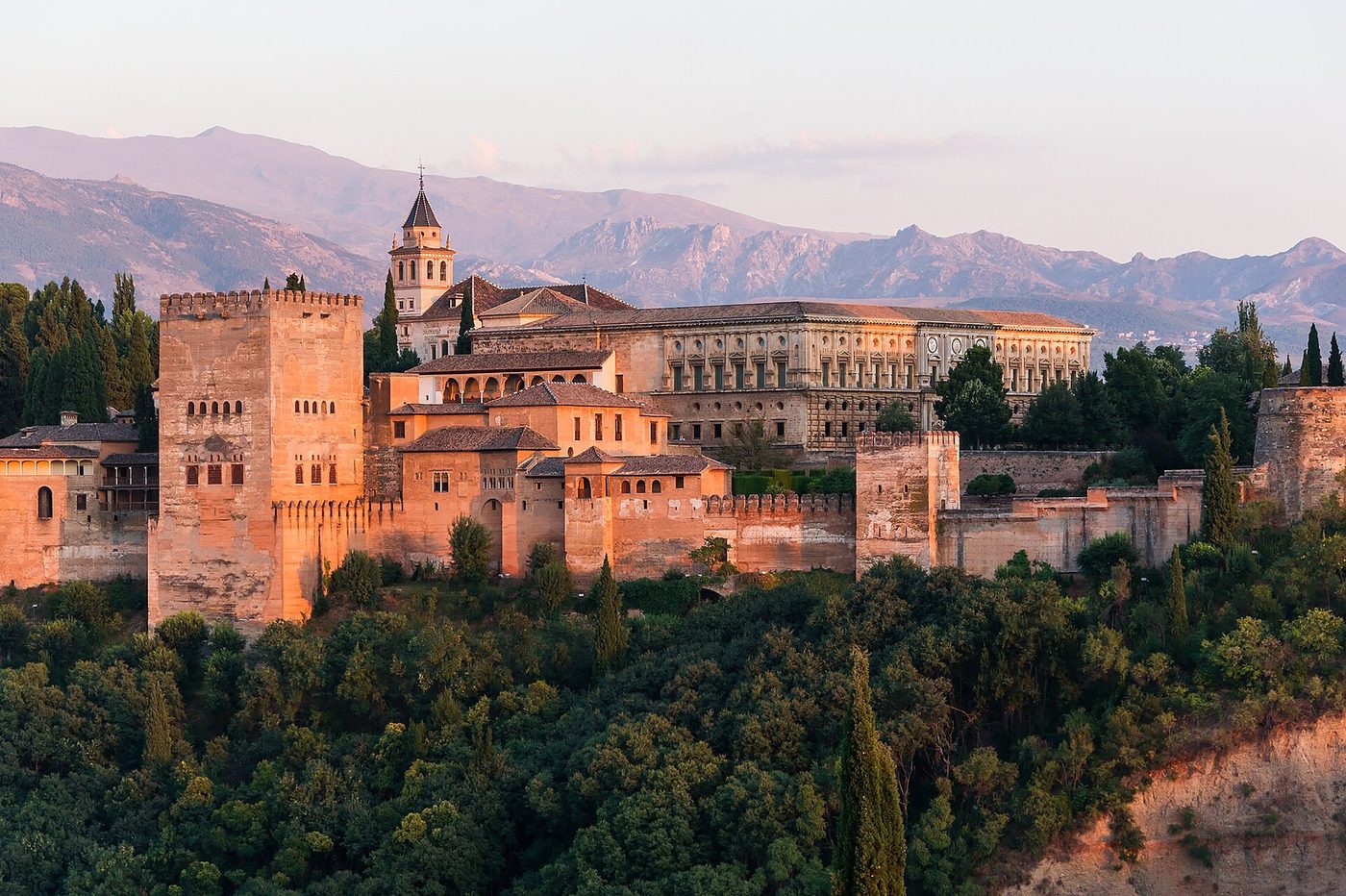
Imagen. Amanecer en el Palacio de Carlos V en Alhambra, Granada, Andalucía (España). — descripción en español de Wikimedia Commons Dawn on Charles V Palace in Alhambra, Granada, Andalusia (Spain). (Jebulon · wikimedia · CC0)
Where this comes from. The conjugations are generated from the rules of Spanish morphology by this project, not copied from a database. Every form is then checked, form by form, against verbecc, an independent open-source conjugator whose Spanish data descends from the Verbiste project — 28,000+ forms across 288 verbs currently agree. Differences that survive review are recorded with a reason in the project's
verify.py; the handful of verbs the reference conjugator cannot handle are named there too. English meanings and the per-form glosses are written and reviewed by hand from the standard dictionary senses, and are generated from three principal parts per verb rather than translated one form at a time. Example sentences and the per-verb notes, where present, are original to this project. Nothing here is scraped from a commercial source.