Present — what is happening now, and what happens habitually
yo
bailoI dance
nosotros
bailamoswe dance
tú
bailasyou dance
vosotros
bailáisyou all dance
él/ella/Ud.
bailahe/she dances
ellos/Uds.
bailanthey dance
Pretérito perfecto
Present perfect — have —ed; a past still touching now. Spain: today, this week. Latin America: mostly the indefinido instead
yo
he bailadoI have danced
nosotros
hemos bailadowe have danced
tú
has bailadoyou have danced
vosotros
habéis bailadoyou all have danced
él/ella/Ud.
ha bailadohe/she has danced
ellos/Uds.
han bailadothey have danced
Presente de subjuntivo
Present subjunctive — after que with wishes, doubt, emotion, ojalá
yo
baile(that) I dance
nosotros
bailemos(that) we dance
tú
bailes(that) you dance
vosotros
bailéis(that) you all dance
él/ella/Ud.
baile(that) he/she dances
ellos/Uds.
bailen(that) they dance
Perfecto de subjuntivo
Present perfect subjunctive — have —ed, under doubt or emotion: no creo que haya venido
yo
haya bailado(that) I have danced
nosotros
hayamos bailado(that) we have danced
tú
hayas bailado(that) you have danced
vosotros
hayáis bailado(that) you all have danced
él/ella/Ud.
haya bailado(that) he/she has danced
ellos/Uds.
hayan bailado(that) they have danced
Pasadowhat went on
Pretérito indefinido
Preterite — a finished past action — it started, it ended
yo
bailéI danced
nosotros
bailamoswe danced
tú
bailasteyou danced
vosotros
bailasteisyou all danced
él/ella/Ud.
bailóhe/she danced
ellos/Uds.
bailaronthey danced
Pretérito imperfecto
Imperfect — used to / was —ing; background, habits, descriptions
yo
bailabaI used to dance
nosotros
bailábamoswe used to dance
tú
bailabasyou used to dance
vosotros
bailabaisyou all used to dance
él/ella/Ud.
bailabahe/she used to dance
ellos/Uds.
bailabanthey used to dance
Pretérito pluscuamperfecto
Past perfect — had —ed; further back than another past event
yo
había bailadoI had danced
nosotros
habíamos bailadowe had danced
tú
habías bailadoyou had danced
vosotros
habíais bailadoyou all had danced
él/ella/Ud.
había bailadohe/she had danced
ellos/Uds.
habían bailadothey had danced
Imperfecto de subjuntivo (-ra)
Imperfect subjunctive — si clauses and past-tense wishes: si tuviera, quería que fuera
yo
bailara(that) I danced
nosotros
bailáramos(that) we danced
tú
bailaras(that) you danced
vosotros
bailarais(that) you all danced
él/ella/Ud.
bailara(that) he/she danced
ellos/Uds.
bailaran(that) they danced
Imperfecto de subjuntivo (-se)
Imperfect subjunctive — the same tense, second form; commoner in Spain and in writing
yo
bailase(that) I danced
nosotros
bailásemos(that) we danced
tú
bailases(that) you danced
vosotros
bailaseis(that) you all danced
él/ella/Ud.
bailase(that) he/she danced
ellos/Uds.
bailasen(that) they danced
Pluscuamperfecto de subjuntivo
Past perfect subjunctive — had —ed, hypothetically: si hubiera sabido
yo
hubiera bailado(that) I had danced
nosotros
hubiéramos bailado(that) we had danced
tú
hubieras bailado(that) you had danced
vosotros
hubierais bailado(that) you all had danced
él/ella/Ud.
hubiera bailado(that) he/she had danced
ellos/Uds.
hubieran bailado(that) they had danced
Pretérito anterior
Preterite perfect — had —ed, immediately before; literary, all but extinct
yo
hube bailadoI had danced
nosotros
hubimos bailadowe had danced
tú
hubiste bailadoyou had danced
vosotros
hubisteis bailadoyou all had danced
él/ella/Ud.
hubo bailadohe/she had danced
ellos/Uds.
hubieron bailadothey had danced
Futurowhat will or would go on
Futuro simple
Future — will — (spoken Spanish often prefers voy a + infinitivo)
yo
bailaréI will dance
nosotros
bailaremoswe will dance
tú
bailarásyou will dance
vosotros
bailaréisyou all will dance
él/ella/Ud.
bailaráhe/she will dance
ellos/Uds.
bailaránthey will dance
Condicional simple
Conditional — would —; also softens a request into politeness
yo
bailaríaI would dance
nosotros
bailaríamoswe would dance
tú
bailaríasyou would dance
vosotros
bailaríaisyou all would dance
él/ella/Ud.
bailaríahe/she would dance
ellos/Uds.
bailaríanthey would dance
Futuro perfecto
Future perfect — will have —ed; done by some future point
yo
habré bailadoI will have danced
nosotros
habremos bailadowe will have danced
tú
habrás bailadoyou will have danced
vosotros
habréis bailadoyou all will have danced
él/ella/Ud.
habrá bailadohe/she will have danced
ellos/Uds.
habrán bailadothey will have danced
Condicional perfecto
Conditional perfect — would have —ed; the road not taken
yo
habría bailadoI would have danced
nosotros
habríamos bailadowe would have danced
tú
habrías bailadoyou would have danced
vosotros
habríais bailadoyou all would have danced
él/ella/Ud.
habría bailadohe/she would have danced
ellos/Uds.
habrían bailadothey would have danced
Futuro de subjuntivo
Future subjunctive — legal and proverbial only: adonde fueres, haz lo que vieres
yo
bailare(should) I dance
nosotros
bailáremos(should) we dance
tú
bailares(should) you dance
vosotros
bailareis(should) you all dance
él/ella/Ud.
bailare(should) he/she dance
ellos/Uds.
bailaren(should) they dance
Imperativotelling someone to
Imperativo afirmativo
Imperative (do it) — orders and requests; there is no yo form
yo
—
nosotros
bailemoslet's dance
tú
bailadance!
vosotros
bailaddance!
él/ella/Ud.
bailedance!
ellos/Uds.
bailendance!
Imperativo negativo
Imperative (don't) — no + subjunctive — never the affirmative form with no in front
yo
—
nosotros
no bailemoslet's not dance
tú
no bailesdon't dance
vosotros
no bailéisdon't dance
él/ella/Ud.
no bailedon't dance
ellos/Uds.
no bailendon't dance
PresenteBailo salsa todos los viernes.I dance salsa every Friday.
Presente de subjuntivoEspero que bailes conmigo.I hope you dance with me.
Pretérito indefinidoAnoche bailamos hasta las tres.Last night we danced until three.
Pretérito imperfectoDe niña bailaba en la cocina.As a girl she used to dance in the kitchen.
Futuro simpleBailaremos en la boda de tu hermano.We will dance at your brother's wedding.
Condicional simpleBailaría contigo, pero me duele el pie.I would dance with you, but my foot hurts.
The model regular -ar verb: not one form deviates. Learn this shape and you can conjugate the large majority of Spanish verbs, since -ar is by far the biggest and the only group still taking new members (googlear, tuitear).
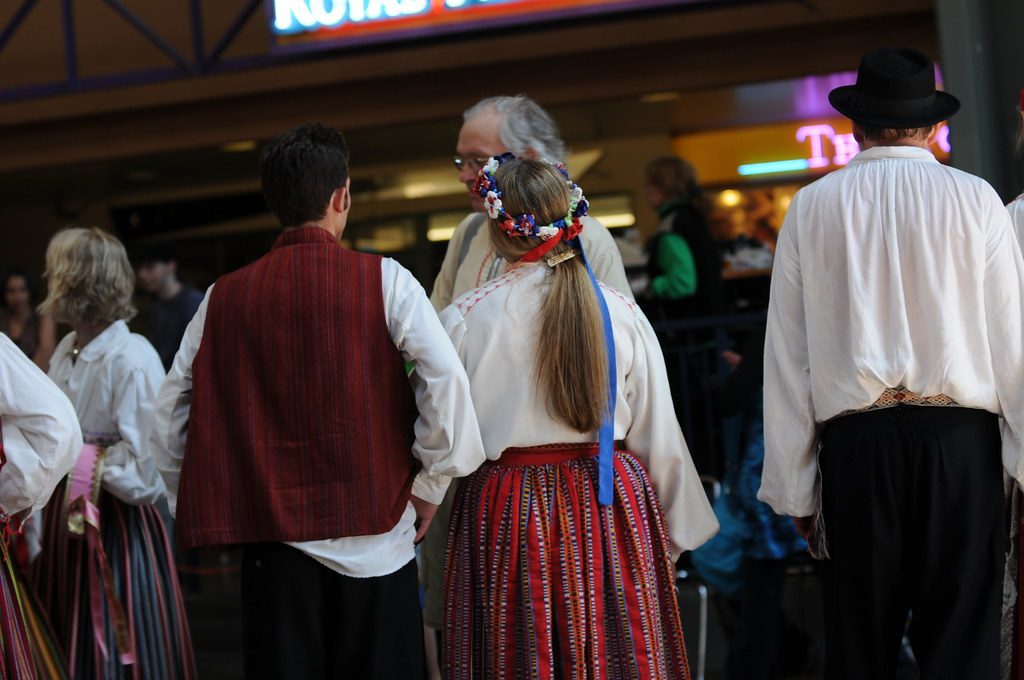
Imagen.Bailarines folclóricos estonios con traje tradicional 1 — traducido de Estonian folk dancers in traditional wear 1 (D Coetzee · flickr · CC0)
Bailarines folclóricos estonios con traje tradicional 1 — Estonian folk dancers in traditional wear 1 · fuente
he, she, you (formal) — one other person — formal you shares it
Presente
bailahe/she dances
Perfecto
ha bailadohe/she has danced
Subj. presente
baile(that) he/she dances
Subj. perfecto
haya bailado(that) he/she has danced
Futuro
bailaráhe/she will dance
Condicional
bailaríahe/she would dance
Fut. perfecto
habrá bailadohe/she will have danced
Cond. perfecto
habría bailadohe/she would have danced
Subj. futuro
bailare(should) he/she dance
Indefinido
bailóhe/she danced
Imperfecto
bailabahe/she used to dance
Pluscuamp.
había bailadohe/she had danced
Subj. imperf.
bailara(that) he/she danced
Subj. -se
bailase(that) he/she danced
Subj. pluscuamp.
hubiera bailado(that) he/she had danced
Pret. anterior
hubo bailadohe/she had danced
Imperativo
bailedance!
Imper. negativo
no bailedon't dance
ellos / ellas / ustedes
they, you all — several others — plural you shares it
Presente
bailanthey dance
Perfecto
han bailadothey have danced
Subj. presente
bailen(that) they dance
Subj. perfecto
hayan bailado(that) they have danced
Futuro
bailaránthey will dance
Condicional
bailaríanthey would dance
Fut. perfecto
habrán bailadothey will have danced
Cond. perfecto
habrían bailadothey would have danced
Subj. futuro
bailaren(should) they dance
Indefinido
bailaronthey danced
Imperfecto
bailabanthey used to dance
Pluscuamp.
habían bailadothey had danced
Subj. imperf.
bailaran(that) they danced
Subj. -se
bailasen(that) they danced
Subj. pluscuamp.
hubieran bailado(that) they had danced
Pret. anterior
hubieron bailadothey had danced
Imperativo
bailendance!
Imper. negativo
no bailendon't dance
PresenteBailo salsa todos los viernes.I dance salsa every Friday.
Presente de subjuntivoEspero que bailes conmigo.I hope you dance with me.
Pretérito indefinidoAnoche bailamos hasta las tres.Last night we danced until three.
Pretérito imperfectoDe niña bailaba en la cocina.As a girl she used to dance in the kitchen.
Futuro simpleBailaremos en la boda de tu hermano.We will dance at your brother's wedding.
Condicional simpleBailaría contigo, pero me duele el pie.I would dance with you, but my foot hurts.
The model regular -ar verb: not one form deviates. Learn this shape and you can conjugate the large majority of Spanish verbs, since -ar is by far the biggest and the only group still taking new members (googlear, tuitear).
Imagen.Bailarines folclóricos estonios con traje tradicional 1 — traducido de Estonian folk dancers in traditional wear 1 (D Coetzee · flickr · CC0)
Bailarines folclóricos estonios con traje tradicional 1 — Estonian folk dancers in traditional wear 1 · fuente