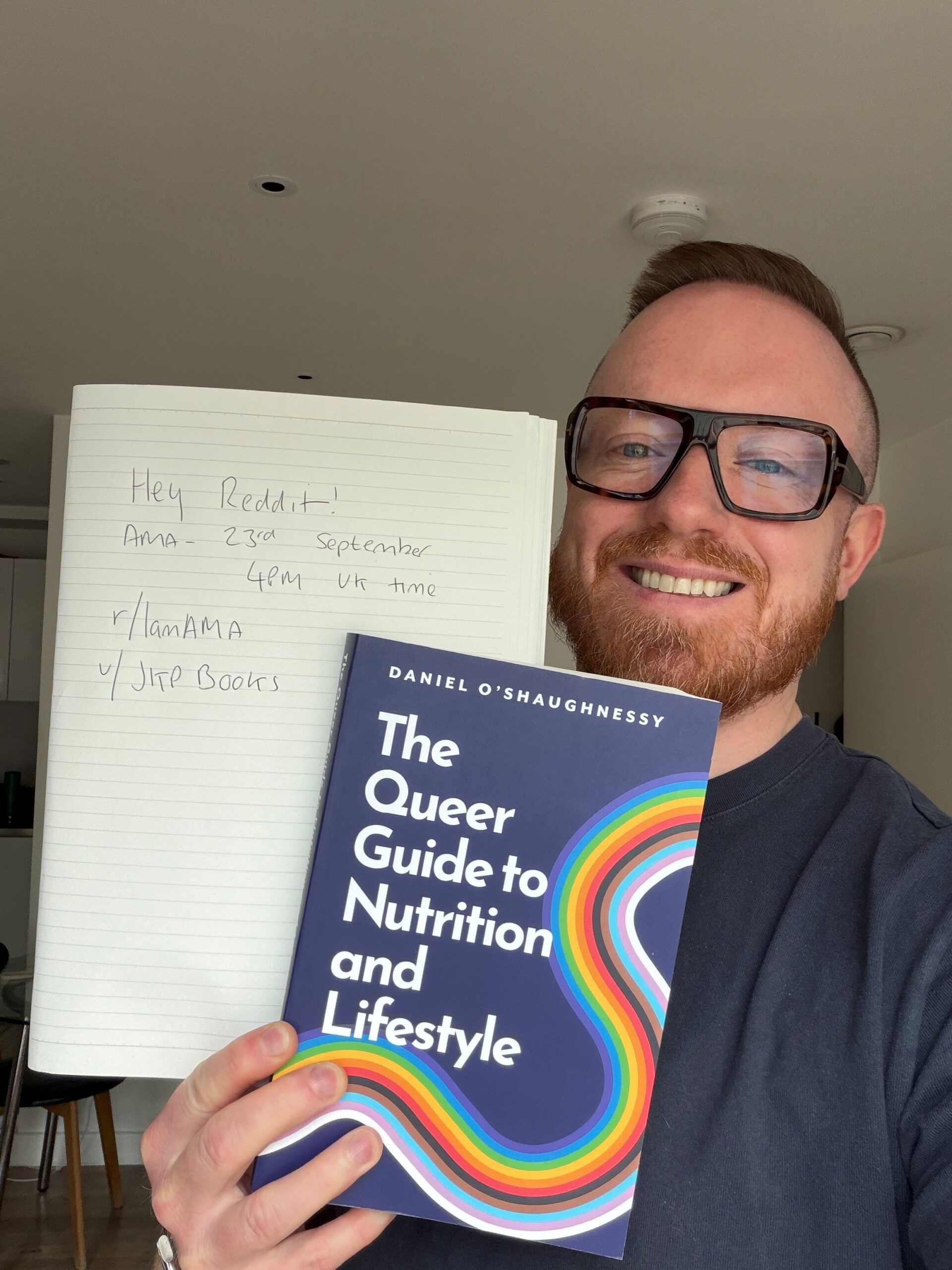
Yes, definitely. I’m neurodivergent myself, and it’s something I’ve tried to weave throughout the book rather than treat as one separate topic.
Nutrition advice with neurodivergence often needs to be much more practical and much less idealised. Executive dysfunction can make meal planning, shopping, cooking and even remembering to eat harder, while sensory issues can affect which foods or environments feel manageable.
Some ADHD medications can also suppress appetite or blunt hunger signals and come with their own side effects, so standard advice like “just listen to your body” doesn’t always work particularly well.
Where the overlap with queerness becomes important is that you can be navigating both contexts at the same time. There may already be pressures around identity, body image, belonging, minority stress or finding healthcare that understands you, while neurodivergence can add masking, sensory overload, difficulty with routines or executive function.
Those things can compound each other rather than existing in separate boxes, and I’ve tried to reflect that throughout the different chapters.
Personally, having ADHD has also made me move away from the idea of a “perfect” nutrition routine. I can have periods where I’m really into shopping, cooking and organising food, and then other periods where the whole thing feels like far too much effort.
Understanding my ADHD also means I can sometimes hear perfectly sensible advice and think, “Yes, I know I’ll do that for two days and then stop.”
So for me, the useful question is less “what is the ideal plan?” and more “what will still work when my motivation, focus or capacity drops?”
There’s also a queer-environment piece to this. In some queer social spaces, nightlife, alcohol or recreational dr*gs can be part of the culture, and for someone who is neurodivergent that can intersect with things like impulsivity, reward-seeking, sensory overload, appetite, sleep and medication.
It doesn’t change the neurodivergence itself, but it can make regulation, recovery and eating patterns harder, particularly if stimulant drugs or ADHD medication are also involved.
I’d also really recommend ADHD Body and Mind by Dr Miguel Toribio-Mateas, who wrote the foreword to my book. It goes much deeper into neurodivergence from a neuroaffirming, nutrition and mental-health perspective.