Present — what is happening now, and what happens habitually
yo
creoI create
nosotros
creamoswe create
tú
creasyou create
vosotros
creáisyou all create
él/ella/Ud.
creahe/she creates
ellos/Uds.
creanthey create
Pretérito perfecto
Present perfect — have —ed; a past still touching now. Spain: today, this week. Latin America: mostly the indefinido instead
yo
he creadoI have created
nosotros
hemos creadowe have created
tú
has creadoyou have created
vosotros
habéis creadoyou all have created
él/ella/Ud.
ha creadohe/she has created
ellos/Uds.
han creadothey have created
Presente de subjuntivo
Present subjunctive — after que with wishes, doubt, emotion, ojalá
yo
cree(that) I create
nosotros
creemos(that) we create
tú
crees(that) you create
vosotros
creéis(that) you all create
él/ella/Ud.
cree(that) he/she creates
ellos/Uds.
creen(that) they create
Perfecto de subjuntivo
Present perfect subjunctive — have —ed, under doubt or emotion: no creo que haya venido
yo
haya creado(that) I have created
nosotros
hayamos creado(that) we have created
tú
hayas creado(that) you have created
vosotros
hayáis creado(that) you all have created
él/ella/Ud.
haya creado(that) he/she has created
ellos/Uds.
hayan creado(that) they have created
Pasadowhat went on
Pretérito indefinido
Preterite — a finished past action — it started, it ended
yo
creéI created
nosotros
creamoswe created
tú
creasteyou created
vosotros
creasteisyou all created
él/ella/Ud.
creóhe/she created
ellos/Uds.
crearonthey created
Pretérito imperfecto
Imperfect — used to / was —ing; background, habits, descriptions
yo
creabaI used to create
nosotros
creábamoswe used to create
tú
creabasyou used to create
vosotros
creabaisyou all used to create
él/ella/Ud.
creabahe/she used to create
ellos/Uds.
creabanthey used to create
Pretérito pluscuamperfecto
Past perfect — had —ed; further back than another past event
yo
había creadoI had created
nosotros
habíamos creadowe had created
tú
habías creadoyou had created
vosotros
habíais creadoyou all had created
él/ella/Ud.
había creadohe/she had created
ellos/Uds.
habían creadothey had created
Imperfecto de subjuntivo (-ra)
Imperfect subjunctive — si clauses and past-tense wishes: si tuviera, quería que fuera
yo
creara(that) I created
nosotros
creáramos(that) we created
tú
crearas(that) you created
vosotros
crearais(that) you all created
él/ella/Ud.
creara(that) he/she created
ellos/Uds.
crearan(that) they created
Imperfecto de subjuntivo (-se)
Imperfect subjunctive — the same tense, second form; commoner in Spain and in writing
yo
crease(that) I created
nosotros
creásemos(that) we created
tú
creases(that) you created
vosotros
creaseis(that) you all created
él/ella/Ud.
crease(that) he/she created
ellos/Uds.
creasen(that) they created
Pluscuamperfecto de subjuntivo
Past perfect subjunctive — had —ed, hypothetically: si hubiera sabido
yo
hubiera creado(that) I had created
nosotros
hubiéramos creado(that) we had created
tú
hubieras creado(that) you had created
vosotros
hubierais creado(that) you all had created
él/ella/Ud.
hubiera creado(that) he/she had created
ellos/Uds.
hubieran creado(that) they had created
Pretérito anterior
Preterite perfect — had —ed, immediately before; literary, all but extinct
yo
hube creadoI had created
nosotros
hubimos creadowe had created
tú
hubiste creadoyou had created
vosotros
hubisteis creadoyou all had created
él/ella/Ud.
hubo creadohe/she had created
ellos/Uds.
hubieron creadothey had created
Futurowhat will or would go on
Futuro simple
Future — will — (spoken Spanish often prefers voy a + infinitivo)
yo
crearéI will create
nosotros
crearemoswe will create
tú
crearásyou will create
vosotros
crearéisyou all will create
él/ella/Ud.
crearáhe/she will create
ellos/Uds.
crearánthey will create
Condicional simple
Conditional — would —; also softens a request into politeness
yo
crearíaI would create
nosotros
crearíamoswe would create
tú
crearíasyou would create
vosotros
crearíaisyou all would create
él/ella/Ud.
crearíahe/she would create
ellos/Uds.
crearíanthey would create
Futuro perfecto
Future perfect — will have —ed; done by some future point
yo
habré creadoI will have created
nosotros
habremos creadowe will have created
tú
habrás creadoyou will have created
vosotros
habréis creadoyou all will have created
él/ella/Ud.
habrá creadohe/she will have created
ellos/Uds.
habrán creadothey will have created
Condicional perfecto
Conditional perfect — would have —ed; the road not taken
yo
habría creadoI would have created
nosotros
habríamos creadowe would have created
tú
habrías creadoyou would have created
vosotros
habríais creadoyou all would have created
él/ella/Ud.
habría creadohe/she would have created
ellos/Uds.
habrían creadothey would have created
Futuro de subjuntivo
Future subjunctive — legal and proverbial only: adonde fueres, haz lo que vieres
yo
creare(should) I create
nosotros
creáremos(should) we create
tú
creares(should) you create
vosotros
creareis(should) you all create
él/ella/Ud.
creare(should) he/she create
ellos/Uds.
crearen(should) they create
Imperativotelling someone to
Imperativo afirmativo
Imperative (do it) — orders and requests; there is no yo form
yo
—
nosotros
creemoslet's create
tú
creacreate!
vosotros
creadcreate!
él/ella/Ud.
creecreate!
ellos/Uds.
creencreate!
Imperativo negativo
Imperative (don't) — no + subjunctive — never the affirmative form with no in front
yo
—
nosotros
no creemoslet's not create
tú
no creesdon't create
vosotros
no creéisdon't create
él/ella/Ud.
no creedon't create
ellos/Uds.
no creendon't create
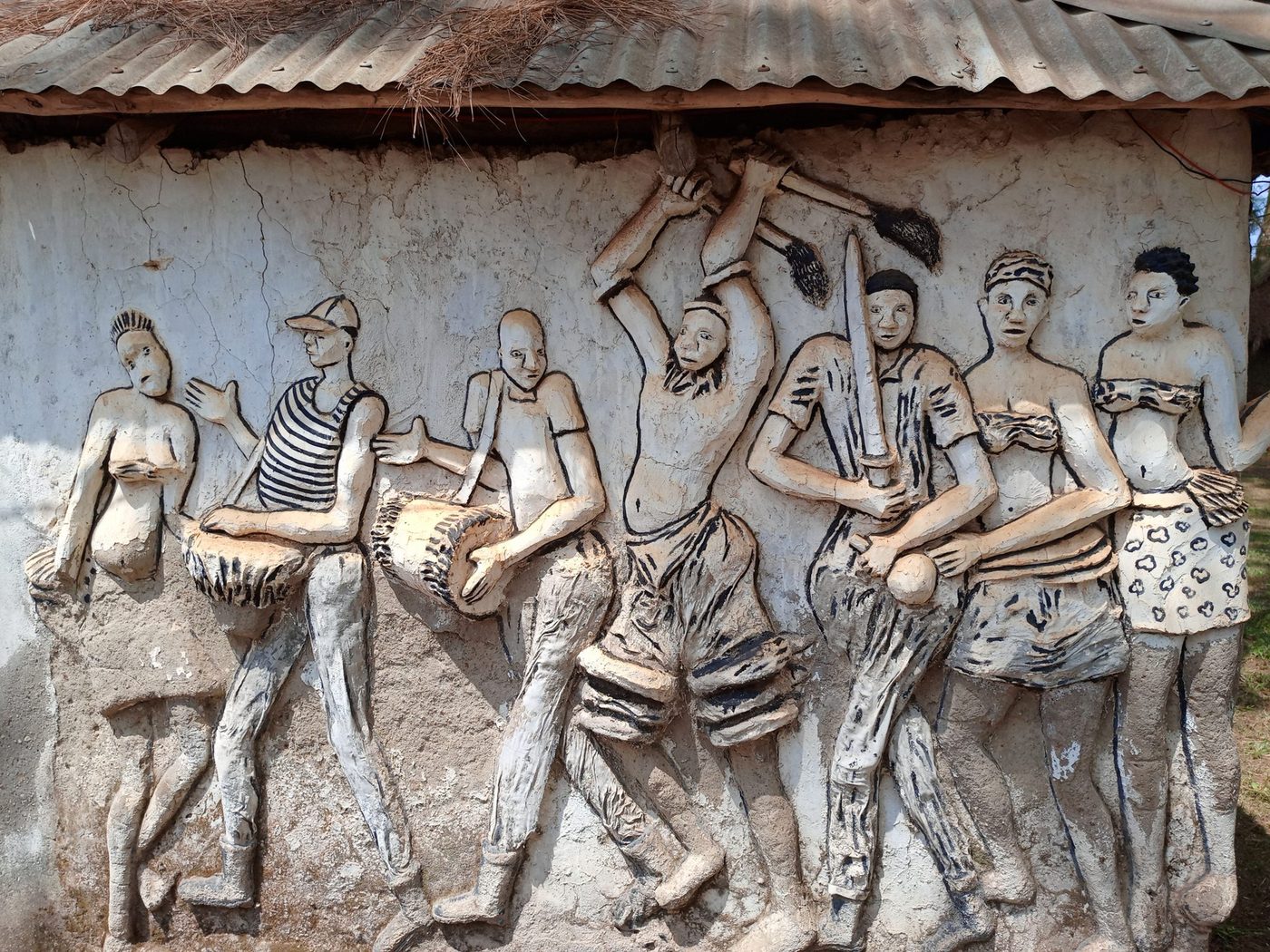
Imagen.Un detallado bajorrelieve público de arcilla en el muro exterior de un edificio en Mbale, que representa una hilera de figuras en una celebración tradicional. En la escena hay tamborileros, bailarines con lanzas y escudos, y mujeres con vestimenta tradicional. Las figuras están modeladas en tonos tierra sobre una pared blanca, bajo un techo rústico de paja y chapa ondulada. — traducido de A detailed public bas-relief clay sculpture on an exterior wall in Mbale depicting a line of figures in a traditional celebration. The scene includes drummers, dancers with spears and shields, and women in traditional attire. The figures are rendered in earth tones against a white wall under a rustic thatched and corrugated metal roof. (Mohammed Kateregga · wordpress · CC0)
Un detallado bajorrelieve público de arcilla en el muro exterior de un edificio en Mbale, que representa una hilera de figuras en una celebración tradicional. En la escena hay tamborileros, bailarines con lanzas y escudos, y mujeres con vestimenta tradicional. Las figuras están modeladas en tonos tierra sobre una pared blanca, bajo un techo rústico de paja y chapa ondulada. — A detailed public bas-relief clay sculpture on an exterior wall in Mbale depicting a line of figures in a traditional celebration. The scene includes drummers, dancers with spears and shields, and women in traditional attire. The figures are rendered in earth tones against a white wall under a rustic thatched and corrugated metal roof. · fuente
he, she, you (formal) — one other person — formal you shares it
Presente
creahe/she creates
Perfecto
ha creadohe/she has created
Subj. presente
cree(that) he/she creates
Subj. perfecto
haya creado(that) he/she has created
Futuro
crearáhe/she will create
Condicional
crearíahe/she would create
Fut. perfecto
habrá creadohe/she will have created
Cond. perfecto
habría creadohe/she would have created
Subj. futuro
creare(should) he/she create
Indefinido
creóhe/she created
Imperfecto
creabahe/she used to create
Pluscuamp.
había creadohe/she had created
Subj. imperf.
creara(that) he/she created
Subj. -se
crease(that) he/she created
Subj. pluscuamp.
hubiera creado(that) he/she had created
Pret. anterior
hubo creadohe/she had created
Imperativo
creecreate!
Imper. negativo
no creedon't create
ellos / ellas / ustedes
they, you all — several others — plural you shares it
Presente
creanthey create
Perfecto
han creadothey have created
Subj. presente
creen(that) they create
Subj. perfecto
hayan creado(that) they have created
Futuro
crearánthey will create
Condicional
crearíanthey would create
Fut. perfecto
habrán creadothey will have created
Cond. perfecto
habrían creadothey would have created
Subj. futuro
crearen(should) they create
Indefinido
crearonthey created
Imperfecto
creabanthey used to create
Pluscuamp.
habían creadothey had created
Subj. imperf.
crearan(that) they created
Subj. -se
creasen(that) they created
Subj. pluscuamp.
hubieran creado(that) they had created
Pret. anterior
hubieron creadothey had created
Imperativo
creencreate!
Imper. negativo
no creendon't create
Imagen.Un detallado bajorrelieve público de arcilla en el muro exterior de un edificio en Mbale, que representa una hilera de figuras en una celebración tradicional. En la escena hay tamborileros, bailarines con lanzas y escudos, y mujeres con vestimenta tradicional. Las figuras están modeladas en tonos tierra sobre una pared blanca, bajo un techo rústico de paja y chapa ondulada. — traducido de A detailed public bas-relief clay sculpture on an exterior wall in Mbale depicting a line of figures in a traditional celebration. The scene includes drummers, dancers with spears and shields, and women in traditional attire. The figures are rendered in earth tones against a white wall under a rustic thatched and corrugated metal roof. (Mohammed Kateregga · wordpress · CC0)
Un detallado bajorrelieve público de arcilla en el muro exterior de un edificio en Mbale, que representa una hilera de figuras en una celebración tradicional. En la escena hay tamborileros, bailarines con lanzas y escudos, y mujeres con vestimenta tradicional. Las figuras están modeladas en tonos tierra sobre una pared blanca, bajo un techo rústico de paja y chapa ondulada. — A detailed public bas-relief clay sculpture on an exterior wall in Mbale depicting a line of figures in a traditional celebration. The scene includes drummers, dancers with spears and shields, and women in traditional attire. The figures are rendered in earth tones against a white wall under a rustic thatched and corrugated metal roof. · fuente